

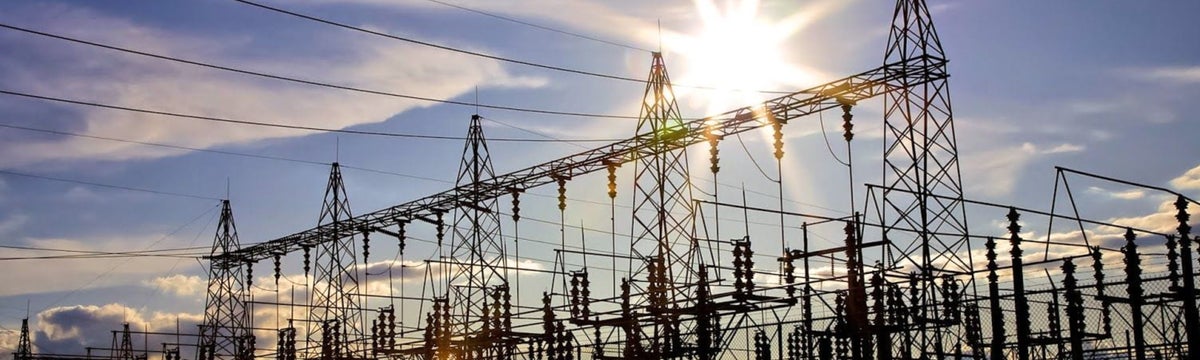
Physical threats to North America’s electric grid are accelerating. Recent reports from the North American Electric Reliability Corporation (NERC) Reliability Issues Steering Committee (RISC) and DHS Threat Assessments confirm that substations and critical energy assets remain primary targets for physical sabotage and long-range gunfire.
Learn more about NERC’s role in grid security and resilience in this video from Archer What is NERC? Part 2 | Ensuring Power Grid Reliability, Resilience. This video provides a clear overview of how NERC oversees Bulk-Power System reliability and physical security across North America.
With the Federal Energy Regulatory Commission’s (FERC) approval of the revised NERC CIP-014-4 physical security standard, asset owners and security specifiers face a heightened regulatory requirement. The updated standard emphasizes evaluating physical threats across proximate assets, forcing utilities to look far beyond their immediate property line.

The Critical Blind Spot Outside the Perimeter
Traditional physical security relies on cameras and access control placed at the fence line. However, high-powered rifle rounds fired from hundreds of yards outside the perimeter leave no visual trace until catastrophic damage occurs. A single round can puncture a transformer casing, causing cooling fluid to drain and leading to rapid overheating, fire, and regional power loss.
Standard perimeter cameras alone cannot proactively flag incoming ballistic threats. Relying solely on post-incident documentation leaves operators blind during the vital time before grid failure begins.
The Solution: Edge-Based Acoustic Threat Detection (ATD)
To satisfy CIP-014-4 requirements and close long-range coverage gaps, close off-fence coverage gaps, modern critical infrastructure security designs require an integrated, real-time acoustic threat detection layer:
500 Sq Ft Sensor Radius with Edge AI: Operating on a 500 sq ft detection radius per sensor, edge AI algorithms analyze acoustic signatures directly on the device, eliminating latency and backend server requirements.
Shockwave-Enhanced Muzzle Blast Dual-Detection: Edge sensors feature a dual-detection capability designed to analyze both the muzzle blast and the supersonic ballistic shockwave.
Line-of-Sight Visual Verification: Even when environmental variables prevent exact 3D coordinates, the system calculates the line of sight to the source. ATD commands linked PTZ cameras via open API (integrating with VMS platforms like Avigilon, Genetec, or Milestone) to slew along that vector instantly. This gives operators rapid visual verification to confirm potential threat activity and inspect critical assets for structural or fluid damage.
Strict Air-Gapped Cybersecurity: Designed for air-gapped operational networks, on-premises software like Acoem Cadence provides live mapping, sensor health, and audio verification without requiring internet connectivity or cloud access.

Continuous Innovation Driven by Enterprise Utility Deployments
As acoustic threat detection scales across massive multi-region power grids, real-world utility environments bring unique acoustic challenges like skyline variations, hills, and surrounding environmental noise. False alarms are one of the single biggest drains on security operation center (SOC) resources.
To significantly reduce alarm fatigue for large utility clients, Acoem recently released key Cadence software advancements:
- Individual Sensor Elevation Tuning: Administrators can now configure elevation and horizon thresholds per individual sensor. This allows the system to distinguish skyline noise (such as overhead fireworks or elevated ambient sound) from genuine ground-level or off-fence threats, tailoring protection to each site’s specific topography.
- Refined AI Analytics: Updates to the onboard neural network further refine acoustic signal analysis, filtering out non-threat anomalies to deliver ultra-reliable, actionable alerts.
Proactive Resilience Over Reactive Documentation
Integrating edge-based gunshot detection gives grid operators the immediate situational awareness needed to isolate transformers, reroute power, and coordinate with law enforcement before damage cascades. By pairing open-architecture software with edge AI, security specifiers can help utilities meet evolving CIP-014-4 standards while maintaining cybersecurity compliance.
Connect With Us at GridSecCon
Attending GridSecCon? Stop by Booth #226 to see a live acoustic threat detection demonstration and learn how as part of your physical critical infrastructure security strategy it extends situational awareness beyond the fence line.
Proven Technology to Secure Your Critical Assets
Don’t wait for an outage to identify your physical vulnerabilities. Empower your security team with the real-time, air-gapped intelligence needed to stop physical threats before they cause catastrophic damage.
Explore Critical Infrastructure Security Resources or talk with a specialist to review your site’s specific technical requirements.


